
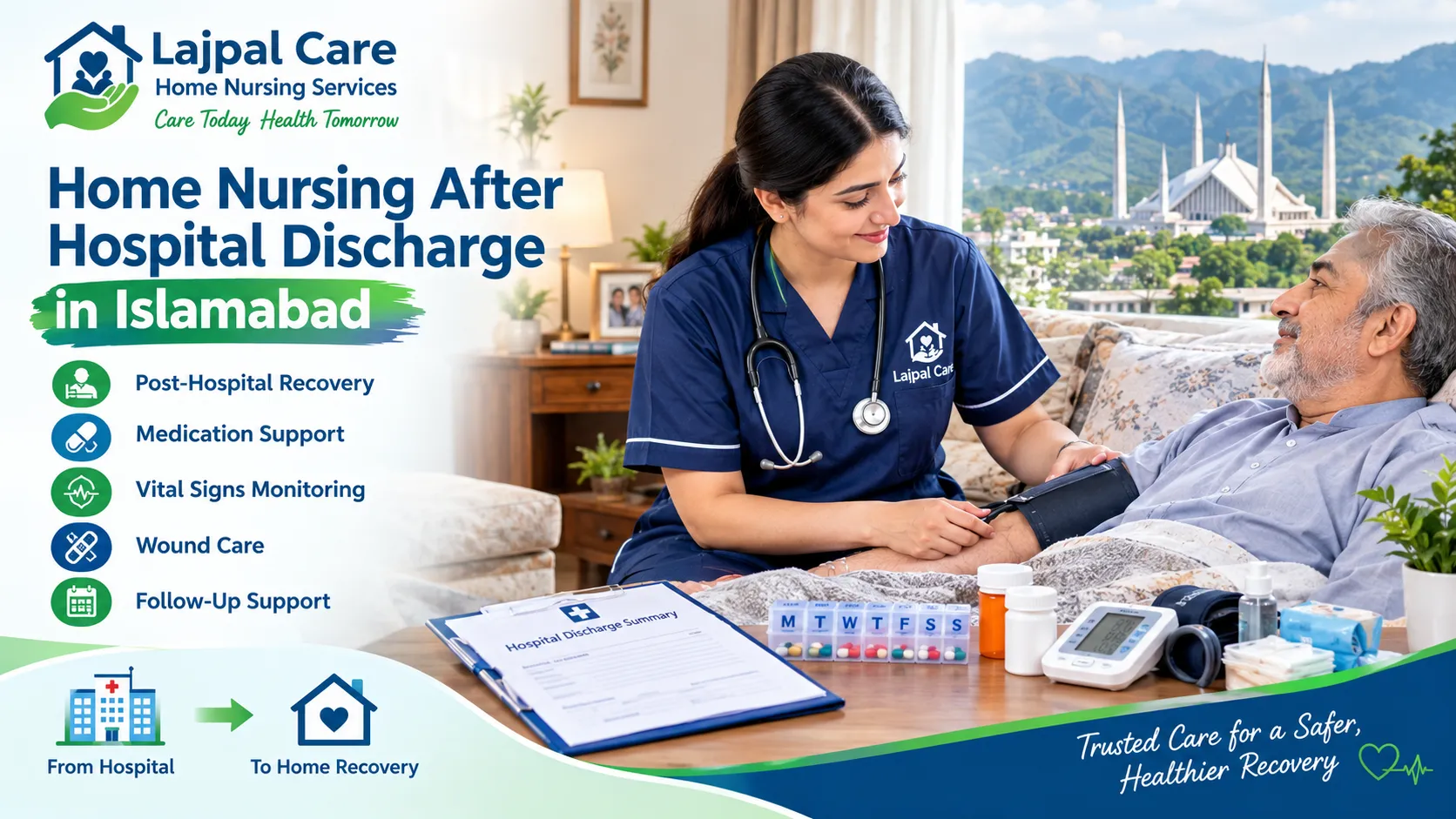
Leaving the hospital does not always mean that a patient is fully recovered. Many people still need help with medicines, wound care, mobility, feeding, monitoring, and daily activities once they return home.
This is where nursing after hospital discharge Islamabad services can be helpful. A qualified home nurse can continue the patient’s care at home while following the discharge instructions provided by the hospital or doctor.
For elderly patients, post-surgery patients, people recovering from serious illness, and patients with limited mobility, professional nursing at home can make the transition from hospital to home safer and easier.
Why Is Nursing Important After Hospital Discharge?
The first few days after discharge can be an important part of recovery.
Patients may still feel weak, experience pain, have difficulty moving, or need medicines at specific times. Some may also need wound dressing, injections, catheter care, feeding support, or regular monitoring.
Family members often want to help, but they may not have the training required for certain medical tasks.
A home nurse can support the patient according to the discharge plan and help the family manage the recovery period more confidently.
What Does a Home Nurse Do After Hospital Discharge?
The exact duties of a home nurse depend on the patient’s medical condition and the doctor’s instructions.
Home nursing support may include:
-
Monitoring blood pressure, temperature, pulse, and other vital signs
-
Giving prescribed medicines on schedule
-
Wound dressing and basic wound monitoring
-
Helping with mobility and safe movement
-
Assisting with feeding and hydration
-
Providing catheter or tube-related care where appropriate
-
Supporting personal hygiene
-
Helping prevent pressure injuries in bedridden patients
-
Observing changes in the patient’s condition
-
Following the hospital discharge instructions
A home nurse should work within their professional scope and follow the treatment plan provided by the patient’s healthcare team.
Who May Need Nursing After Hospital Discharge in Islamabad?
Not every patient requires professional nursing after leaving the hospital.
However, home nursing may be useful for patients who still need regular medical support or close supervision.
This can include elderly patients, people recovering from surgery, patients with fractures, stroke patients, bedridden patients, people recovering from serious infections, and patients with chronic illnesses.
Patients who require wound dressing, injections, mobility assistance, or regular health monitoring may also benefit from short-term or longer-term nursing care at home.
Home Nursing After Surgery
Post-surgery patients often need additional support during the early recovery period.
Depending on the procedure, they may experience pain, weakness, limited movement, or difficulty performing normal daily activities.
A home nurse may help with medicine schedules, wound care, mobility, hygiene, and monitoring.
The nurse can also observe the patient for changes that may need medical attention.
However, home nursing does not replace follow-up visits with the surgeon or doctor.
Patients should continue attending all recommended appointments.
Wound Care at Home
Wound care is one of the common reasons families arrange nursing after hospital discharge Islamabad.
Surgical wounds, pressure injuries, or other wounds may require regular dressing and observation.
A trained nurse can change dressings according to the prescribed care plan and maintain appropriate hygiene during the process.
Families should seek medical advice if the wound develops concerning symptoms such as increasing redness, swelling, unusual discharge, worsening pain, or fever.
Medication Support After Discharge
Hospitals often provide patients with a list of medicines to take after discharge.
These medicines may need to be taken at different times during the day.
For elderly or seriously ill patients, managing several medicines can sometimes become difficult.
A home nurse can help follow the prescribed medication schedule and ensure that medicines are given according to the doctor’s instructions.
The nurse should not change a medicine, dose, or treatment plan without instructions from an authorised healthcare professional.
Mobility and Fall Prevention
Patients are often weaker after spending time in hospital.
Even someone who was previously independent may temporarily need help standing, walking, or using the bathroom.
This can increase the risk of falls.
A home nurse can assist with safe movement and help the patient follow mobility instructions given by the doctor or physiotherapist.
For patients recovering from fractures, joint surgery, stroke, or serious illness, mobility support may be an important part of home recovery.
Care for Bedridden Patients
Bedridden patients often require more intensive care after leaving the hospital.
They may need assistance with turning, hygiene, feeding, medicines, and monitoring.
Regular repositioning may also be required to improve comfort and reduce the risk of pressure injuries.
The patient's care plan should be based on their medical condition and the instructions given by the hospital.
Families may choose 12-hour or 24-hour nursing depending on how much supervision the patient requires.
12-Hour or 24-Hour Nursing After Hospital Discharge?
The amount of nursing support required varies from patient to patient.
A 12-hour nurse may be suitable when the patient mainly needs assistance during the daytime or nighttime and family support is available during the remaining hours.
A 24-hour nursing arrangement may be more appropriate when the patient needs continuous supervision, frequent medicines, mobility assistance, or nursing support throughout the night.
Families should consider the patient’s condition, mobility, medication schedule, and doctor’s recommendations before choosing the number of nursing hours.
How Home Nursing Can Help Families
Caring for someone after hospital discharge can be demanding.
Family members may need to manage medicines, meals, hygiene, movement, doctor appointments, and other responsibilities at the same time.
Professional home nursing can provide additional support during this period.
It may also help family members understand the patient’s care routine and recognise changes that should be reported to the healthcare provider.
The goal is to create a safe and organised recovery environment at home.
How Long Is Home Nursing Needed After Discharge?
There is no fixed period.
Some patients may only need nursing support for a few days after a minor procedure.
Others may require several weeks while recovering from major surgery or illness.
Patients with long-term mobility or medical needs may require ongoing nursing support.
The level of care should be reviewed regularly and adjusted according to the patient’s recovery.
What to Check Before Hiring a Home Nurse in Islamabad
Families should carefully evaluate the nursing provider before arranging care.
Check the nurse’s qualifications and relevant experience. Explain the patient’s medical condition clearly and provide the hospital discharge documents.
The nurse should understand the prescribed medicines, nursing instructions, mobility restrictions, and follow-up schedule.
Families should also clarify the required shift length, duties, replacement policy, and communication process before starting the service.
Keep the Hospital Discharge Documents Available
Discharge documents contain important information about the patient's treatment and recovery.
Keep documents such as the discharge summary, medicine list, prescriptions, laboratory results, follow-up instructions, and doctor contact details in an easily accessible place.
These documents can help the home nurse understand the care plan and communicate more effectively with the patient's healthcare team when necessary.
When Should You Contact the Doctor?
Home nursing can provide valuable support, but some symptoms require medical review.
Contact the patient’s doctor or seek urgent medical care if the patient develops severe breathing difficulty, chest pain, loss of consciousness, uncontrolled bleeding, sudden confusion, severe weakness, very high fever, or any other serious or rapidly worsening symptoms.
Families should also follow any specific warning signs listed in the hospital discharge instructions.
Choosing Nursing After Hospital Discharge in Islamabad
The right home nursing arrangement depends on the patient rather than a standard package.
A patient recovering from a minor procedure may only need temporary assistance.
An elderly or bedridden patient may require longer shifts and more regular monitoring.
Before arranging nursing after hospital discharge Islamabad, review the hospital discharge plan and discuss the patient's needs with the treating doctor where necessary.
The aim is to provide the right level of care while helping the patient recover comfortably at home.
Final Thoughts
Recovery often continues long after a patient leaves the hospital.
Professional nursing after hospital discharge Islamabad services can support patients who still need medicines, wound care, mobility assistance, monitoring, or help with daily activities.
The best care plan should be based on the patient’s medical condition, discharge instructions, and level of independence.
With proper nursing support and regular medical follow-up, many patients can continue their recovery safely and comfortably in their own homes.
Frequently Asked Questions
Yes. Families can arrange home nursing before the patient leaves the hospital so that care can begin as soon as the patient reaches home.
A qualified nurse may provide wound dressing when it is included in the prescribed care plan and within the nurse's professional scope.
Not necessarily. It depends on the patient's condition, mobility, medicines, and ability to manage daily activities safely after discharge.
Yes. Short-term nursing may be suitable for patients who only need support during the early recovery period.
Not for every patient. Some patients may only need daytime or nighttime support, while others with complex needs may require continuous care. The decision should be based on the patient's condition and medical advice.