
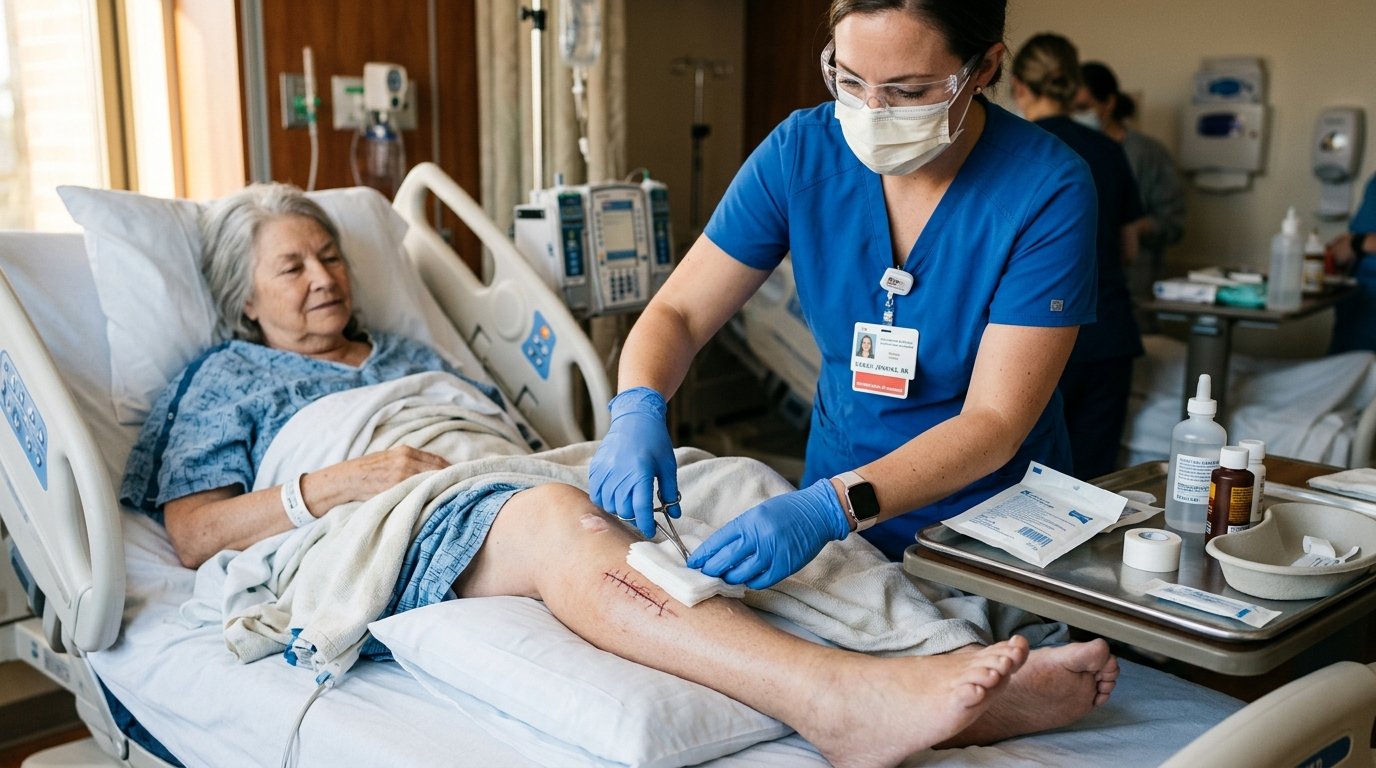
Some patients still need a high level of medical support after leaving the hospital. They may be medically stable enough to continue recovery at home but still require close observation, specialised equipment, and trained nursing care.
An ICU nurse at home Islamabad service may be considered for selected patients who need advanced home nursing under the direction of their treating doctor.
Home ICU care is not suitable for every patient. It should only be arranged when the patient’s condition, home environment, medical equipment, and staffing can support safe care outside the hospital.
What Is ICU Nursing at Home?
ICU nursing at home is a higher level of home nursing for patients with complex medical needs.
These patients may require frequent monitoring, oxygen support, feeding tubes, urinary catheters, tracheostomy care, suctioning, wound care, or other specialised nursing procedures.
The nurse follows the medical plan created by the patient’s healthcare team.
The goal is to continue necessary care at home while maintaining patient safety and responding quickly to any concerning change.
Who May Need an ICU Nurse at Home?
A patient may need advanced home nursing after a serious illness, major surgery, prolonged hospital stay, or intensive care admission.
Possible cases may include:
-
Patients recovering after a long ICU stay
-
Patients with tracheostomies
-
Patients requiring oxygen support
-
Neurological patients with limited mobility
-
Bedridden patients with complex medical needs
-
Patients using feeding tubes
-
Patients requiring frequent suctioning
-
Patients needing regular vital-sign monitoring
-
Patients with multiple medical devices
The decision to move a patient home should be made with the treating doctor and hospital team.
Is Home ICU Care the Same as Hospital ICU Care?
No.
A home environment cannot fully reproduce the resources of a hospital intensive care unit.
Hospitals have immediate access to doctors, laboratory testing, imaging, emergency procedures, specialised equipment, and multiple healthcare professionals.
Home ICU care may provide advanced nursing and monitoring, but there are limits to what can safely be managed outside a hospital.
Families should understand these limits before arranging care.
What Does an ICU Nurse at Home Do?
The exact responsibilities depend on the patient's condition.
An ICU nurse at home Islamabad may assist with:
-
Monitoring vital signs
-
Oxygen management according to medical instructions
-
Tracheostomy care
-
Suctioning when prescribed
-
Feeding tube care
-
Catheter care
-
Medication administration
-
Wound dressing
-
Positioning and pressure-area care
-
Recording fluid intake and output
-
Monitoring neurological condition
-
Supporting mobility where appropriate
-
Maintaining nursing records
-
Reporting concerning changes to the medical team
The nurse should only perform procedures within their training and professional scope.
Continuous Patient Monitoring
Monitoring is one of the most important parts of advanced home nursing.
Depending on the patient's condition, this may include:
-
Heart rate
-
Blood pressure
-
Temperature
-
Oxygen saturation
-
Respiratory rate
-
Blood glucose
-
Level of consciousness
Some patients may require frequent checks rather than continuous electronic monitoring.
The monitoring plan should come from the treating doctor.
Abnormal readings should not be considered in isolation. The patient’s overall condition and doctor’s instructions are equally important.
Oxygen Support at Home
Some patients need supplemental oxygen after discharge.
Oxygen may be delivered through a concentrator, cylinder, nasal cannula, mask, or another prescribed system.
A trained nurse can help ensure the equipment is used according to the doctor's instructions.
The nurse may also monitor oxygen saturation and observe for breathing difficulty.
Oxygen flow rates should not be changed without appropriate medical instructions unless an emergency plan specifically allows it.
Tracheostomy Care
Patients with a tracheostomy may require specialised nursing support.
Care can include cleaning around the tracheostomy site, maintaining airway hygiene, suctioning when prescribed, and monitoring breathing.
Tracheostomy care requires proper training.
Families should not attempt unfamiliar procedures without professional instruction because airway problems can become serious quickly.
An emergency plan should be available for any patient receiving tracheostomy care at home.
Suctioning
Some patients cannot clear secretions effectively.
They may require suctioning through the mouth, nose, or tracheostomy.
This should only be performed by trained staff or family members who have received appropriate instruction.
The frequency and technique should follow the medical plan.
Excessive or incorrect suctioning can cause complications.
Feeding Tube Care
Patients who cannot eat safely by mouth may use a feeding tube.
This can include a nasogastric tube or another form of enteral feeding access.
A trained nurse can assist with feeding according to the prescribed schedule and monitor for problems such as blockage, leakage, vomiting, abdominal swelling, or discomfort.
The patient's nutrition plan should come from the appropriate healthcare professional.
Medication Administration
Patients receiving ICU-level home care may take several medicines.
Some may need strict timing.
A qualified nurse can help administer prescribed medicines and maintain accurate records.
Depending on the care plan and local clinical practice, certain medications may require additional medical supervision.
The nurse should not independently change medicines or doses.
Wound and Pressure Injury Care
Patients recovering from critical illness may spend long periods in bed.
This can increase the risk of pressure injuries.
A nurse may assist with repositioning, skin checks, pressure-area care, and wound dressing according to the treatment plan.
Pressure-relieving mattresses and other equipment may also be recommended.
Any worsening wound should be reported to the healthcare team.
Catheter Care
Some patients may use a urinary catheter.
A nurse may help with catheter hygiene, drainage monitoring, and general care.
Changes such as reduced urine output, blood in the urine, leakage, pain, fever, or blockage should be reported promptly.
Catheter insertion or replacement should only be performed by appropriately trained healthcare professionals.
Equipment Used for Home ICU Nursing
The equipment required depends on the patient's condition.
Possible equipment may include:
-
Oxygen concentrator
-
Backup oxygen cylinder
-
Pulse oximeter
-
Blood pressure monitor
-
Glucose monitor
-
Suction machine
-
Nebuliser
-
Hospital bed
-
Pressure-relieving mattress
-
Feeding equipment
-
Wheelchair
-
Medical supplies
-
Emergency backup equipment
Some patients may require more advanced devices.
Equipment should only be used when it has been recommended and the people caring for the patient know how to operate it safely.
Does a Patient Need a Ventilator at Home?
Some patients who require long-term ventilatory support may be cared for at home under highly specialised medical arrangements.
However, home ventilation requires detailed planning.
This may include trained staff, suitable equipment, backup power, backup ventilation arrangements, emergency procedures, and close medical supervision.
A patient who is unstable or requires frequent changes in ventilator settings may need hospital-based care rather than routine home nursing.
Why Backup Power Is Important
Some medical devices depend on electricity.
This can include oxygen concentrators, suction machines, feeding pumps, monitors, and other equipment.
For patients who depend on electrical medical devices, power failure can create serious risk.
Families should discuss backup power arrangements with the healthcare team and equipment provider.
Depending on the device, this may include batteries, backup cylinders, UPS systems, or generators.
ICU Nurse Staffing at Home
Staffing should reflect the complexity of the patient's condition.
Some patients may need one nurse during a 12-hour shift.
Others may require 24-hour nursing through rotating shifts.
A single nurse should not be expected to work continuously without appropriate rest.
For complex patients, families may also need access to doctors, physiotherapists, respiratory therapists, or other healthcare professionals.
The staffing model should be planned before the patient leaves the hospital.
12-Hour vs 24-Hour ICU Nursing
A 12-hour shift may be enough when the patient is stable and trained family members can safely manage the remaining hours.
However, 24-hour nursing may be considered when the patient requires frequent monitoring, airway care, tube feeding, medicines, repositioning, or assistance during both day and night.
Patients who cannot safely be left without trained support may need round-the-clock staffing.
The decision should be based on clinical need rather than convenience alone.
Preparing the Home Before Discharge
The home should be prepared before the patient arrives.
The care area should have enough space for the bed, equipment, and nursing staff.
Electrical outlets and backup power should be assessed if medical equipment will be used.
Important supplies should be organised and easy to access.
Families should also keep the following available:
-
Hospital discharge summary
-
Medication list
-
Doctor’s instructions
-
Emergency contact numbers
-
Equipment instructions
-
Follow-up schedule
-
Nursing care plan
Good preparation can reduce confusion after discharge.
Emergency Planning
Every patient receiving advanced home nursing should have a clear emergency plan.
Families and nurses should know who to contact if the patient’s condition suddenly worsens.
They should also know which hospital the patient should be taken to if urgent treatment is needed.
Emergency arrangements should be discussed before discharge rather than during a crisis.
When Should the Patient Return to Hospital?
Home nursing has limits.
Urgent medical care may be required if the patient develops:
-
Severe breathing difficulty
-
Sudden drop in consciousness
-
Uncontrolled bleeding
-
Severe chest pain
-
Seizures
-
Serious airway problems
-
Persistent very low oxygen levels
-
Sudden neurological changes
-
Rapidly worsening condition
Families should also follow any patient-specific warning signs provided by the doctor.
How to Choose an ICU Nurse at Home in Islamabad
Advanced home nursing requires more experience than routine personal care.
Before hiring an ICU nurse at home Islamabad, families should ask about the nurse’s qualifications and previous experience with critical or high-dependency patients.
If the patient has a tracheostomy, feeding tube, oxygen requirement, catheter, complex wound, or other specialised need, confirm that the nurse has relevant training.
The nursing provider should also explain what happens if a nurse becomes unavailable and whether replacement staff can be arranged.
Questions to Ask a Home ICU Nursing Provider
Families should understand exactly what the service includes.
Important questions include:
-
What qualifications do the nurses have?
-
Do they have ICU or critical-care experience?
-
Can they manage the patient’s specific equipment?
-
Is 24-hour nursing available?
-
How are shift changes managed?
-
What happens if the nurse is absent?
-
Is medical supervision available?
-
What emergency procedures are followed?
-
Which equipment must the family arrange?
These details should be clarified before the patient returns home.
Home ICU Nursing vs Regular Home Nursing
Regular home nursing may be suitable for patients who need medicines, wound care, mobility assistance, or basic monitoring.
Home ICU nursing is more appropriate for patients with complex clinical needs that require closer observation and specialised skills.
The distinction depends on the patient’s condition rather than the name of the service.
Families should avoid paying for an ICU-level service unless the patient genuinely needs advanced nursing support.
Final Thoughts
An ICU nurse at home Islamabad can support selected patients who need advanced nursing care after leaving the hospital.
This may include monitoring, oxygen support, tracheostomy care, suctioning, feeding tube care, wound care, medication administration, and other specialised nursing tasks.
However, home ICU care must be carefully planned.
The patient should be medically suitable for home care, the right equipment should be available, trained staff should be present, and a clear emergency plan should be in place.
The safest approach is to arrange home ICU nursing in coordination with the patient’s treating doctor and hospital team.
Frequently Asked Questions
Some medically stable patients with complex care needs may continue treatment at home when their doctor believes it is appropriate and the necessary nursing, equipment, and emergency arrangements are available.
A trained nurse can help manage prescribed oxygen therapy and monitor the patient according to the doctor’s instructions.
A nurse with appropriate training may provide tracheostomy care, suctioning, and related monitoring according to the patient's medical plan.
Not always. Some patients may need 12-hour care, while others require continuous nursing. The decision depends on clinical needs and the availability of trained family support.
Equipment varies according to the patient. It may include oxygen equipment, monitors, suction machines, a hospital bed, pressure-relieving mattress, feeding equipment, and emergency backups.