
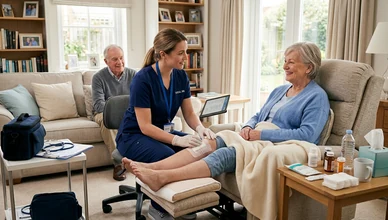
Wound care may look simple, but some wounds need proper cleaning, dressing, monitoring, and medical attention to heal safely. This is especially important after surgery, injury, pressure sores, diabetic wounds, or when a patient is bedridden.
Professional wound dressing at home Islamabad services can help patients who need regular wound care but do not want to visit a clinic or hospital for every dressing change.
The right time to call a nurse depends on the type of wound, its condition, the patient’s overall health, and the instructions given by the doctor.
What Is Wound Dressing at Home?
Wound dressing at home means a trained nurse provides wound care at the patient’s residence.
This may include cleaning the wound, applying the prescribed dressing, checking the surrounding skin, and observing for signs that the wound may not be healing properly.
The nurse should follow the doctor’s instructions and use an appropriate dressing method for the type of wound.
Home dressing can be especially helpful for patients who have difficulty travelling because of age, weakness, surgery, disability, or limited mobility.
When Should You Call a Nurse for Wound Dressing?
You may need a nurse when the wound requires more than basic first aid.
Professional care may be appropriate when:
-
The wound needs regular dressing changes
-
The wound is deep or difficult to reach
-
The patient recently had surgery
-
The patient is bedridden
-
There is a pressure injury
-
The patient has diabetes
-
The wound is healing slowly
-
There is a drain, tube, or medical device near the wound
-
The doctor has advised professional dressing
-
Family members are not trained to manage the wound safely
A nurse can help follow the prescribed wound-care plan and monitor how the wound is changing over time.
Wound Dressing After Surgery
Surgical wounds often need careful monitoring after the patient leaves the hospital.
Some wounds remain covered for a specific period, while others need regular dressing changes.
A home nurse can provide dressing care according to the surgeon’s instructions.
The nurse may also check for changes such as increasing redness, swelling, discharge, bleeding, or worsening pain.
Patients should not remove stitches, staples, drains, or special dressings unless the treating doctor has instructed them to do so.
Dressing for Bedridden Patients
Bedridden patients may develop pressure injuries because certain areas of the body remain under pressure for long periods.
These wounds can occur around the heels, hips, back, elbows, and other pressure points.
A trained nurse can assist with wound dressing and regular skin checks.
The patient may also need repositioning, skin protection, pressure-relieving equipment, and proper nutrition as part of the overall care plan.
Wound dressing alone may not be enough if the cause of the pressure is not addressed.
Diabetic Wound Care at Home
People with diabetes can sometimes develop wounds that heal slowly, especially on the feet or lower legs.
These wounds should not be ignored.
A qualified nurse may provide wound dressing at home Islamabad under medical guidance, but diabetic wounds often need regular review by a doctor or specialist as well.
Patients should seek medical attention if the wound becomes larger, changes colour, develops discharge, smells unusual, or becomes increasingly painful.
Reduced sensation can also make diabetic wounds more difficult to notice.
What Does a Home Nurse Do During Wound Dressing?
The exact process depends on the wound and medical instructions.
A nurse may:
-
Review the wound-care instructions
-
Wash or sanitise hands properly
-
Use appropriate clean or sterile supplies
-
Remove the old dressing carefully
-
Observe the wound and surrounding skin
-
Clean the wound as directed
-
Apply the prescribed dressing
-
Secure the dressing
-
Record changes in size, drainage, colour, or condition
-
Advise the family when medical review may be needed
Not every wound should be treated in the same way.
The dressing material and technique should match the wound-care plan.
How Often Should a Wound Dressing Be Changed?
There is no single schedule for every wound.
Some dressings may need to be changed daily. Others may remain in place for several days.
The frequency depends on the wound type, amount of drainage, dressing material, location, and doctor’s instructions.
Changing a dressing too frequently may disturb healing in some cases, while leaving a wet or contaminated dressing in place may create other problems.
Families should follow the schedule provided by the healthcare professional.
Signs a Wound May Need Medical Attention
Some wound changes require more than routine dressing.
Contact a doctor or seek medical advice if there is:
-
Increasing redness around the wound
-
Increasing swelling
-
Worsening pain
-
Pus or unusual discharge
-
Bad smell
-
Fever
-
Heavy or uncontrolled bleeding
-
Dark or black tissue
-
Wound edges opening
-
Rapid increase in wound size
-
Red streaks spreading from the wound
A rapidly worsening wound should not be managed only with home dressing.
Can Family Members Do Wound Dressing?
For simple wounds, family members may be able to change dressings if they have been properly instructed.
However, more complex wounds should be managed by trained healthcare professionals.
Families should not guess which antiseptic, cream, or dressing material to use.
Using inappropriate products may irritate the wound or interfere with treatment.
If there is uncertainty, professional assessment is safer.
Why Clean Technique Matters
Good hygiene is important during wound care.
Hands, dressing materials, and the surrounding area should be handled carefully to reduce contamination.
The exact technique may be clean or sterile depending on the wound and medical instructions.
A trained nurse understands how to handle wound-care supplies appropriately and reduce unnecessary contact with the wound.
What Supplies May Be Needed?
Supplies depend on the specific wound.
They may include:
-
Gloves
-
Gauze
-
Saline or prescribed cleansing solution
-
Prescribed dressing material
-
Tape or bandage
-
Waste bags
-
Skin-protection products
Specialised wounds may need more advanced dressings.
Families should avoid buying expensive wound products without knowing whether they are suitable.
Wound Dressing for Elderly Patients
Older adults may require additional care because their skin can be more fragile.
They may also have diabetes, circulation problems, reduced mobility, or other conditions that affect healing.
An elderly patient may benefit from home dressing if travelling to a clinic is difficult.
The nurse can also monitor other factors such as pressure areas, skin condition, mobility, and general health.
Wound Care After Hospital Discharge
Some patients leave the hospital before their wound is fully healed.
The discharge plan may include instructions for regular dressing, stitch removal, drain care, medicines, and follow-up appointments.
A home nurse can help continue the prescribed wound-care routine.
Families should provide the nurse with the hospital discharge papers and any written wound instructions.
Can a Nurse Remove Stitches at Home?
In some situations, a qualified nurse may remove stitches or staples at home if this has been authorised by the treating doctor and is within the nurse’s professional scope.
The timing is important.
Removing stitches too early can cause the wound to open, while leaving them in longer than advised can also create problems.
Families should not decide the removal date themselves.
Wound Dressing and Pain
Some discomfort during dressing may occur, especially if the wound is sensitive.
The nurse should handle the wound gently and follow the recommended technique.
If the patient experiences severe or increasing pain, the wound may need medical review.
Pain that suddenly becomes worse should not simply be treated as a normal part of wound healing.
How Long Does Wound Care Take?
Healing time varies widely.
A small surgical wound may heal relatively quickly.
A deep wound, pressure injury, or diabetic wound may take much longer.
Healing can also be affected by age, nutrition, circulation, diabetes, infection, smoking, mobility, and other medical conditions.
Families should focus on proper care rather than expecting every wound to heal within the same period.
How to Choose a Wound Dressing Nurse in Islamabad
Before booking wound dressing at home Islamabad, check the nurse’s qualifications and experience.
Ask whether they have handled the specific type of wound involved.
For complex wounds, diabetic wounds, pressure injuries, or post-surgical wounds, relevant experience is especially important.
The nursing provider should also explain how dressing visits are scheduled and what happens if the regular nurse is unavailable.
What Information Should You Give the Nurse?
Provide as much relevant information as possible.
This may include:
-
Type of wound
-
How the wound happened
-
Date of surgery if relevant
-
Doctor’s instructions
-
Current medicines
-
Diabetes or other medical conditions
-
Allergies
-
Previous dressing method
-
Any recent changes in the wound
This helps the nurse understand the care plan before starting.
When Is Home Dressing Not Enough?
Some wounds need hospital or specialist care.
A patient may require urgent medical assessment if there is severe infection, uncontrolled bleeding, major tissue damage, deep trauma, exposed structures, or rapid deterioration.
Home nursing should not delay emergency treatment.
A nurse can support wound care, but serious wounds may require a surgeon, wound specialist, emergency department, or other medical service.
Final Thoughts
Professional wound dressing at home Islamabad can be useful for patients who need regular wound care but have difficulty travelling to a clinic.
A trained nurse can help with dressing changes, wound observation, hygiene, and following the doctor’s care plan.
This service may be especially helpful after surgery, for bedridden patients, elderly patients, and people with complex wounds.
However, home dressing should not replace medical assessment when a wound shows signs of infection, worsening damage, heavy bleeding, or delayed healing.
The safest approach is to follow the prescribed wound-care plan and seek medical advice whenever the wound changes unexpectedly.
Frequently Asked Questions
Yes. Some patients only need scheduled nursing visits for wound dressing rather than full-day home nursing.
It depends on the wound, dressing type, amount of drainage, and doctor’s instructions. There is no single schedule for every wound.
Yes, a qualified nurse may provide surgical wound dressing according to the surgeon’s care plan.
Some diabetic wounds can be managed partly at home, but they often require ongoing medical review because healing can be slower and complications can be serious.
Seek urgent medical care for uncontrolled bleeding, severe infection, major wound opening, rapidly worsening symptoms, severe pain, or other serious changes.