
When a family member needs care at home, one of the first questions is whether to hire a home nurse or a patient attendant.
The two roles may look similar, but they are not the same.
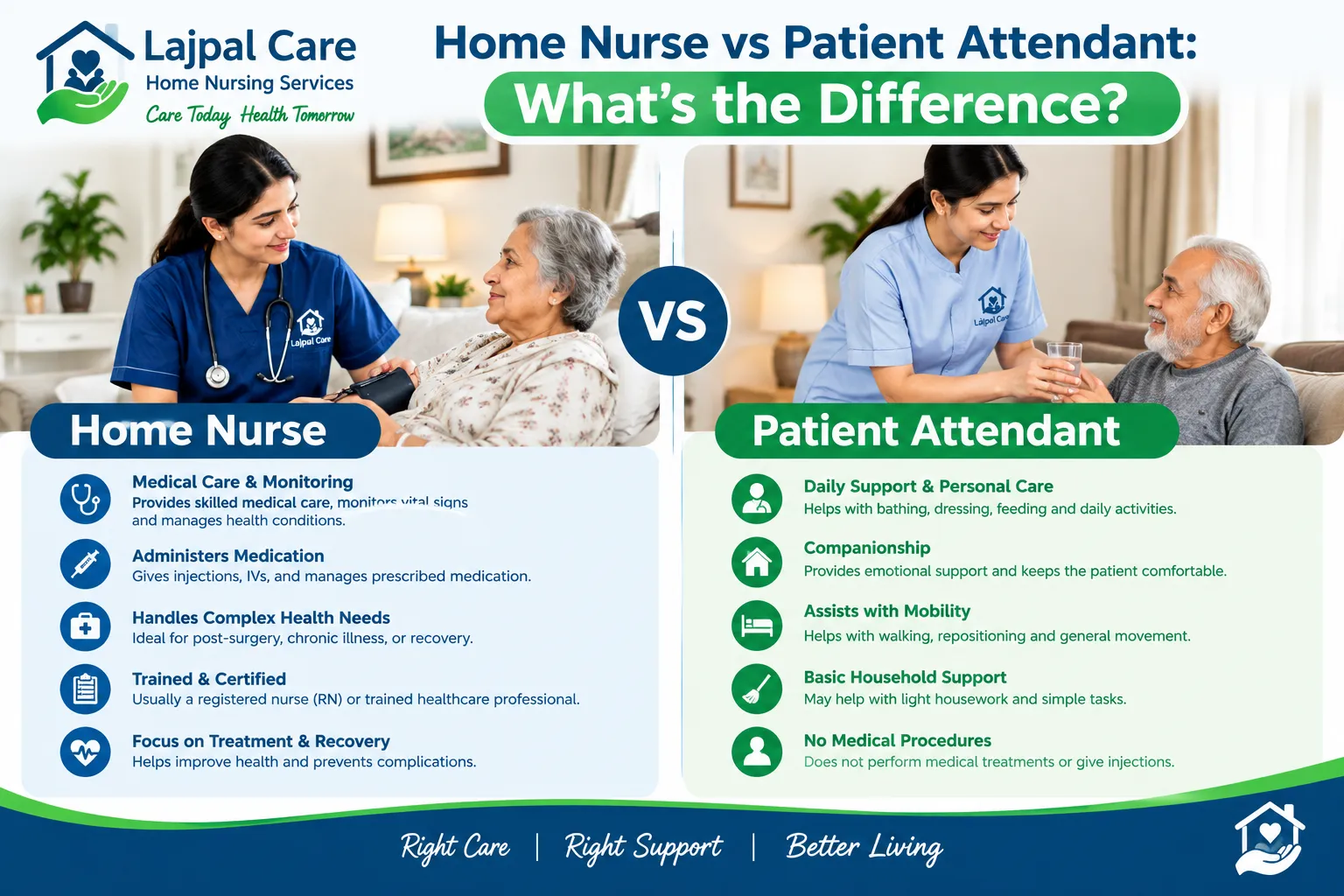
A home nurse usually provides medical or clinical support, while a patient attendant mainly helps with daily personal care and routine assistance. Understanding the difference between a home nurse vs patient attendant can help families choose the right type of support for their loved one.
What Is a Home Nurse?
A home nurse is a trained healthcare professional who provides nursing care in the patient’s home.
Home nurses may support patients who are recovering after surgery, living with chronic health conditions, requiring wound care, or needing regular medical monitoring.
Depending on their training and the patient’s care plan, a home nurse may assist with:
-
Medication administration
-
Wound dressing
-
Injections
-
Blood pressure monitoring
-
Blood sugar monitoring
-
Catheter care
-
Feeding support
-
Post-surgery care
-
Patient observation
-
Coordination with doctors or family members
A home nurse is generally more suitable when the patient needs medical or clinical care in addition to basic daily assistance.
What Is a Patient Attendant?
A patient attendant mainly helps a patient with everyday activities.
They are usually responsible for non-medical support and personal care.
A patient attendant may assist with:
-
Bathing
-
Dressing
-
Grooming
-
Feeding
-
Walking support
-
Toileting
-
Changing clothes
-
Helping the patient move around
-
Keeping the patient comfortable
-
Basic companionship
Patient attendants are often hired for elderly people, weak patients, people with mobility issues, or individuals who need help with routine daily tasks.
Home Nurse vs Patient Attendant: Main Difference
The biggest difference is the level of medical responsibility.
A home nurse is trained to provide nursing care.
A patient attendant mainly provides personal and daily living assistance.
This means a patient attendant may help a person sit up, eat, walk, or change clothes, but they should not perform medical procedures unless they have the proper healthcare training and are authorised to do so.
Home Nurse vs Patient Attendant Comparison
|
Area |
Home Nurse |
Patient Attendant |
|
Medical training |
Yes |
Usually limited or non-medical |
|
Medication support |
Can assist according to medical instructions |
Usually reminders only |
|
Wound dressing |
Yes, if trained |
Usually no |
|
Injections |
May provide if qualified |
No |
|
Blood pressure monitoring |
Yes |
May only assist if trained |
|
Bathing and dressing |
May help |
Yes |
|
Feeding assistance |
Yes |
Yes |
|
Mobility support |
Yes |
Yes |
|
Post-surgery care |
Yes |
Basic support only |
|
Elderly companionship |
Yes |
Yes |
|
Clinical observation |
Yes |
Limited |
The exact responsibilities may vary depending on the healthcare provider, training level, and patient’s condition.
When Should You Choose a Home Nurse?
A home nurse may be the better option when the patient requires medical monitoring or nursing procedures.
For example, you may need a home nurse if the patient:
-
Recently had surgery
-
Has wounds that require dressing
-
Needs injections
-
Uses a catheter
-
Requires regular blood pressure or blood sugar monitoring
-
Has a serious chronic condition
-
Needs medication management
-
Requires close observation
-
Has been discharged from hospital but still needs nursing care
In these situations, trained nursing support can be important for patient safety.
When Is a Patient Attendant Enough?
A patient attendant may be suitable when the patient is medically stable but needs help with everyday activities.
For example, an elderly person may not require regular medical procedures but may still need assistance getting out of bed, eating meals, using the bathroom, or walking safely.
A patient attendant can also provide companionship and help reduce the burden on family members who are managing the patient’s daily routine.
Can a Patient Attendant Give Medicines?
This depends on the person’s training and the healthcare provider’s rules.
In many cases, a patient attendant may remind the patient to take prescribed medicines or help bring the medicine to them.
However, attendants should not independently change doses, prescribe medicines, give injections, or make medical decisions.
Tasks involving medication administration should generally be handled by qualified healthcare professionals according to the doctor’s instructions.
Can a Home Nurse Also Provide Personal Care?
Yes.
A home nurse may also assist with personal care, especially when the patient cannot perform routine tasks independently.
For example, a nurse may help with hygiene, feeding, repositioning, mobility, and comfort while also managing medical needs.
This is one reason some families choose nursing care for patients who require both clinical support and daily assistance.
Which One Is Better for Elderly Care?
It depends on the elderly person’s health condition.
If the person is medically stable and mainly needs help with bathing, meals, walking, or companionship, a patient attendant may be sufficient.
If the person has medical conditions that require regular monitoring, medication support, wound care, injections, or other nursing procedures, a home nurse may be more appropriate.
Some elderly patients may benefit from both types of support.
Which One Is Better After Surgery?
Patients recovering from surgery often require more than basic assistance.
A home nurse may be able to monitor the patient, assist with wound care, follow medication schedules, observe for unusual symptoms, and help with mobility.
A patient attendant can support daily activities, but they should not replace a qualified nurse when clinical care is required.
Always follow the discharge instructions provided by the patient’s doctor or hospital.
What About Bedridden Patients?
Bedridden patients may need either a home nurse, a patient attendant, or both.
A patient attendant may help with:
-
Repositioning
-
Feeding
-
Bathing
-
Changing clothes
-
Toileting
-
General comfort
A home nurse may be required if the patient also needs wound care, catheter management, medication administration, vital sign monitoring, or other clinical procedures.
The right choice depends on the patient’s medical condition.
Is a Home Nurse More Expensive Than a Patient Attendant?
Home nursing services may cost more because nurses usually have more professional training and can perform clinical duties.
Patient attendant services are generally focused on basic daily care and may therefore have a different pricing structure.
However, cost should not be the only factor.
Families should first determine what level of care the patient actually needs.
Choosing a lower-cost attendant for a patient who requires nursing care can create unnecessary risks.
Can You Hire Both?
Yes.
Some patients need medical care as well as continuous personal assistance.
For example, a nurse may visit for wound dressing, medication support, or medical monitoring, while a patient attendant remains with the patient for longer periods to assist with daily activities.
This arrangement can work well for elderly, disabled, or recovering patients with mixed care needs.
How to Decide Between a Home Nurse and Patient Attendant
Before hiring anyone, consider the patient’s current condition.
Ask yourself:
-
Does the patient need medical procedures?
-
Is wound care required?
-
Does the patient need injections?
-
Are vital signs being monitored regularly?
-
Does the patient mainly need help with daily activities?
-
Can the patient walk without assistance?
-
Does the patient need help with bathing or toileting?
-
Has the doctor recommended nursing care?
If the patient requires medical care, a trained home nurse is generally the more appropriate option.
If the main need is personal support and daily assistance, a patient attendant may be enough.
Questions to Ask a Home Care Provider
Before arranging care, ask the service provider about the training and responsibilities of the person being assigned.
You should know:
-
What qualifications do they have?
-
What tasks can they perform?
-
Do they have experience with similar patients?
-
Are they background verified?
-
Who supervises their work?
-
Is replacement staff available?
-
What are the duty hours?
-
What happens if the patient’s condition changes?
Clear answers can help prevent confusion later.
Frequently Asked Questions
A home nurse provides trained nursing and medical support, while a patient attendant mainly assists with personal care and daily activities.
Normally, wound dressing should be handled by someone with appropriate nursing or medical training.
Some home care services provide attendants for long shifts or 24-hour support. Availability depends on the provider.
No. Elderly patients who mainly need help with mobility, hygiene, food, or companionship may only require a patient attendant.
Yes, especially when the patient requires wound care, medication management, monitoring, or other nursing procedures after leaving the hospital.
Final Thoughts
The choice between a home nurse vs patient attendant depends on the patient’s medical condition and level of independence.
A home nurse is generally suitable when clinical care, medical monitoring, or nursing procedures are required.
A patient attendant is usually better for everyday assistance such as bathing, feeding, walking, toileting, and companionship.
Before making a decision, discuss the patient’s needs with their doctor and the home healthcare provider. Choosing the correct level of support can make home care safer, more comfortable, and easier for the entire family.