Home Nursing vs Hospital Care: Understanding the Difference
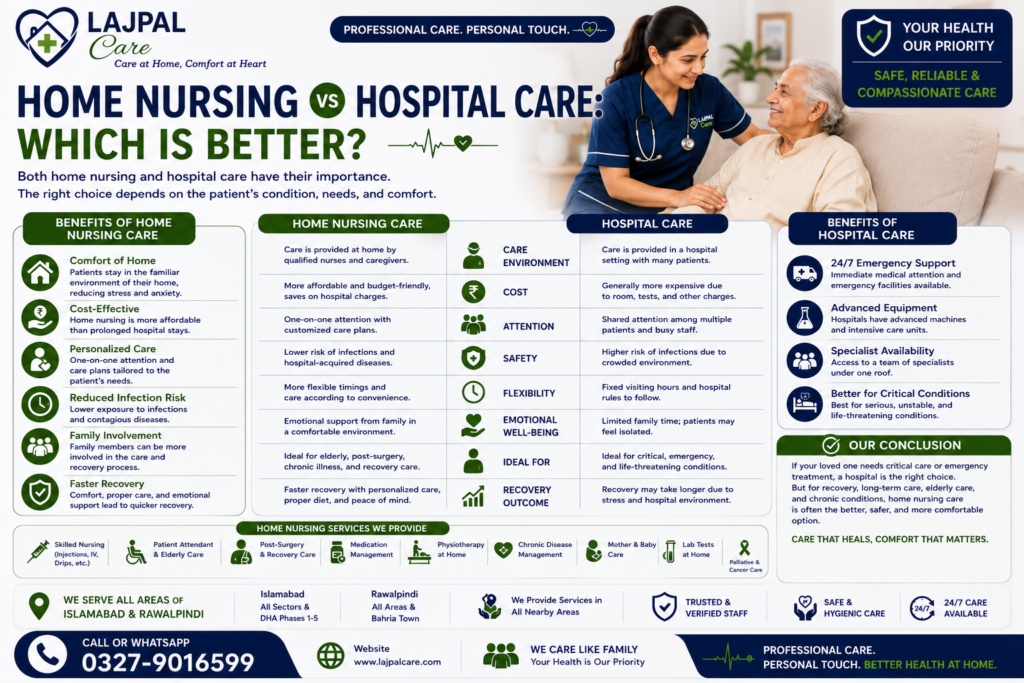
Choosing between Home Nursing vs Hospital Care is one of the most important healthcare decisions a family may face. The right choice depends on the patient’s medical condition, treatment plan, level of monitoring required, and recommendations from the treating physician.
For patients who need emergency treatment, surgery, or intensive medical intervention, hospital care is essential. However, many medically stable patients can continue their recovery safely at home with professional Home Nursing Services.
This guide compares Home Nursing vs Hospital Care to help families understand the advantages and limitations of each option.
Table of Contents
-
What Is Home Nursing?
-
What Is Hospital Care?
-
Home Nursing vs Hospital Care for Recovery
-
Home Nursing vs Hospital Care for Elderly Patients
-
Home Nursing vs Hospital Care After Surgery
-
Home Nursing vs Hospital Care for Long-Term Conditions
-
Benefits of Home Nursing
-
Benefits of Hospital Care
-
When Is Home Nursing the Better Choice?
-
When Is Hospital Care the Better Choice?
-
Frequently Asked Questions
-
Conclusion
What Is Home Nursing?
Home Nursing is a professional healthcare service delivered in the patient’s home by qualified nurses. Care is provided according to the patient’s medical needs and the treatment plan prescribed by the treating physician.
Home Nursing Services may include:
-
Medication administration as prescribed
-
Vital signs monitoring
-
Wound dressing
-
Injection and IV therapy
-
Catheter care
-
NG Tube and PEG Tube care
-
Oxygen therapy support
-
Bedridden patient care
-
Stroke patient care
-
Elderly care
-
Post-surgical nursing care
What Is Hospital Care?
Hospital Care refers to medical treatment provided in a healthcare facility where doctors, nurses, and specialists are available to manage emergencies, perform surgeries, provide intensive monitoring, and treat complex medical conditions.
Hospitals are designed for patients who require immediate medical intervention or specialized equipment that cannot be safely provided at home.
Home Nursing vs Hospital Care for Recovery
When comparing Home Nursing vs Hospital Care for recovery, many medically stable patients benefit from continuing treatment at home after discharge.
Home Nursing may provide:
-
A familiar and comfortable environment
-
Personalized one-to-one attention
-
Better family involvement
-
Reduced travel for routine nursing procedures
-
Continuity of care after hospital discharge
Hospital Care remains appropriate when continuous specialist supervision or emergency medical intervention is required.
Home Nursing vs Hospital Care for Elderly Patients
Many older adults prefer to remain in their own homes whenever possible.
For medically stable elderly patients, Home Nursing may support:
-
Medication management
-
Personal hygiene
-
Mobility assistance
-
Health monitoring
-
Fall prevention
-
Nutrition support
Hospital Care may be necessary if the patient develops an acute illness, severe infection, or another condition requiring inpatient treatment.
Home Nursing vs Hospital Care After Surgery
After surgery, the treating physician determines when a patient is ready to leave the hospital.
Once discharged, Home Nursing can assist with:
-
Wound dressing
-
Medication support
-
Recovery monitoring
-
Mobility assistance
-
Infection prevention education
-
Follow-up care coordination
Patients with complications or unstable conditions may need to remain under hospital supervision until it is safe to return home.
Home Nursing vs Hospital Care for Long-Term Medical Conditions
Patients with long-term illnesses such as stroke, Parkinson’s disease, dementia, diabetes, or cancer often require ongoing support.
For many medically stable individuals, Home Nursing provides long-term assistance while allowing them to remain in familiar surroundings.
Hospital Care is generally reserved for periods when specialized medical treatment or emergency care becomes necessary.
Benefits of Home Nursing
Professional Home Nursing offers several important advantages:
-
Personalized patient care
-
Recovery in a familiar environment
-
Greater comfort and privacy
-
Flexible 12-hour and 24-hour care options
-
Better family participation
-
Reduced unnecessary hospital visits
-
Ongoing monitoring according to the care plan
Benefits of Hospital Care
Hospital Care provides:
-
Emergency medical treatment
-
Access to specialists
-
Surgical facilities
-
Intensive care services
-
Advanced diagnostic equipment
-
Continuous inpatient monitoring for critically ill patients
These services are essential when a patient’s condition cannot be safely managed at home.
When Is Home Nursing the Better Choice?
Home Nursing may be appropriate when a patient:
-
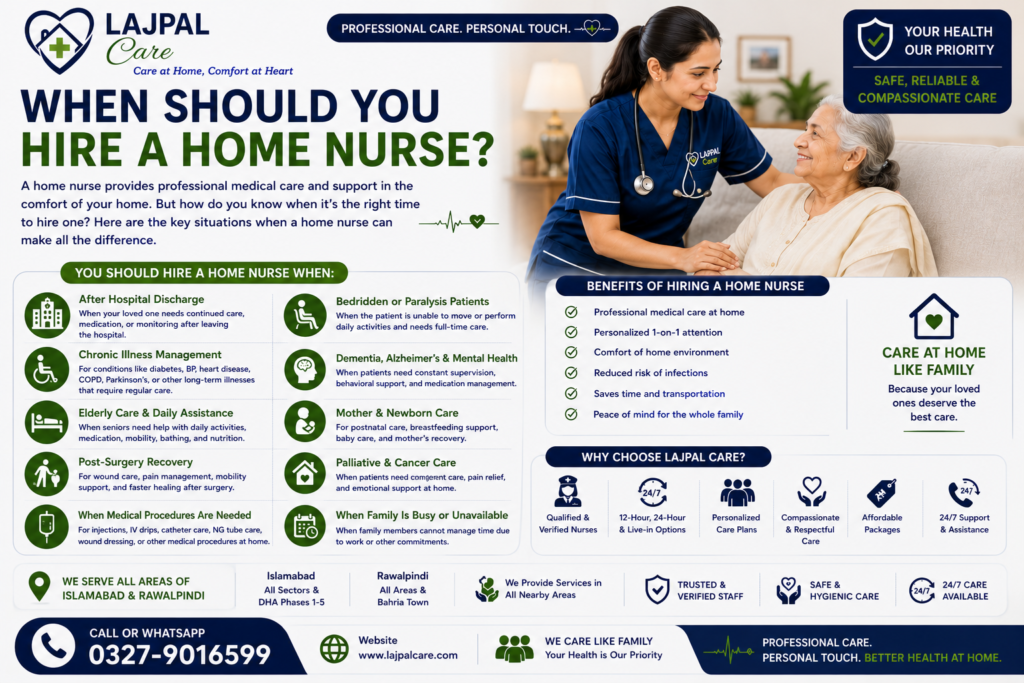
Has been discharged from the hospital
-
Is medically stable
-
Requires professional nursing procedures
-
Needs elderly care
-
Requires long-term support
-
Needs rehabilitation assistance
-
Prefers recovering at home
The decision should always be made in consultation with the treating physician.
When Is Hospital Care the Better Choice?
Hospital Care is generally more appropriate when a patient:
-
Requires emergency treatment
-
Needs surgery
-
Is critically ill
-
Requires intensive monitoring
-
Has rapidly changing medical needs
-
Needs specialized inpatient treatment
Frequently Asked Questions About Home Nursing vs Hospital Care
Is Home Nursing better than Hospital Care?
Neither option is universally better. The most appropriate choice depends on the patient’s medical condition, treatment goals, and the recommendations of the treating physician.
Can patients recover faster with Home Nursing?
Many medically stable patients appreciate recovering at home because of the familiar environment and individualized care. Recovery outcomes depend on many factors, including the patient’s condition and adherence to the prescribed treatment plan.
Is Hospital Care always necessary after surgery?
Not always. Many patients are discharged once it is medically safe to continue recovery at home with appropriate nursing support.
Can elderly patients receive professional care at home?
Yes. Home Nursing can provide medication support, health monitoring, mobility assistance, and personal care for medically stable elderly patients.
How do I decide between Home Nursing and Hospital Care?
Discuss the patient’s condition with the treating physician. They can recommend whether hospital treatment or professional Home Nursing is the safest and most appropriate option.
Conclusion
The comparison of Home Nursing vs Hospital Care shows that both play essential roles in patient care. Hospitals provide life-saving treatment, emergency care, surgery, and intensive monitoring when required. Home Nursing offers personalized healthcare, comfort, continuity of care, and professional support for many medically stable patients recovering at home.
The best choice depends on the patient’s individual healthcare needs and should always be guided by qualified medical advice.
Suggested Internal Links
Link this article to:
-
What Are Home Nursing Services?
-
Benefits of Home Nursing Services
-
How to Choose the Best Home Nurse
-
When Should You Hire a Home Nurse?
-
Home Nursing Services
-
Home Patient Care Services
-
Hospital Discharge Care
-
ICU Care at Home
-
Bedridden Patient Care
-
Stroke Patient Care
-
Elderly Care at Home
-
Patient Attendant Services
Website: https://homepatientcareservices.com