When Should You Hire a Home Nurse?
Deciding when to hire a home nurse is an important healthcare decision for any family. Many people wait until a medical condition becomes difficult to manage, but professional home nursing can often provide valuable support much earlier in the recovery process.
A qualified home nurse can help patients recover safely at home, monitor their condition, provide prescribed nursing care, and assist families in managing day-to-day healthcare needs. Understanding the situations in which home nursing may be appropriate can help families make informed decisions.
Table of Contents
-
What Does a Home Nurse Do?
-
Signs You May Need a Home Nurse
-
Medical Conditions That May Require Home Nursing
-
Benefits of Hiring a Home Nurse
-
Short-Term vs Long-Term Home Nursing
-
Questions to Ask Before Hiring
-
Frequently Asked Questions
-
Conclusion
What Does a Home Nurse Do?
A home nurse provides professional nursing care in the patient’s home according to the treatment plan prescribed by the treating physician. Depending on the patient’s condition, services may include:
-
Medication administration as prescribed
-
Vital signs monitoring
-
Wound dressing
-
Injection and IV therapy
-
Catheter care
-
NG Tube and PEG Tube care
-
Oxygen therapy support
-
Tracheostomy care
-
Post-surgical nursing care
-
Patient and family education
-
Health monitoring and documentation
Signs You May Need a Home Nurse
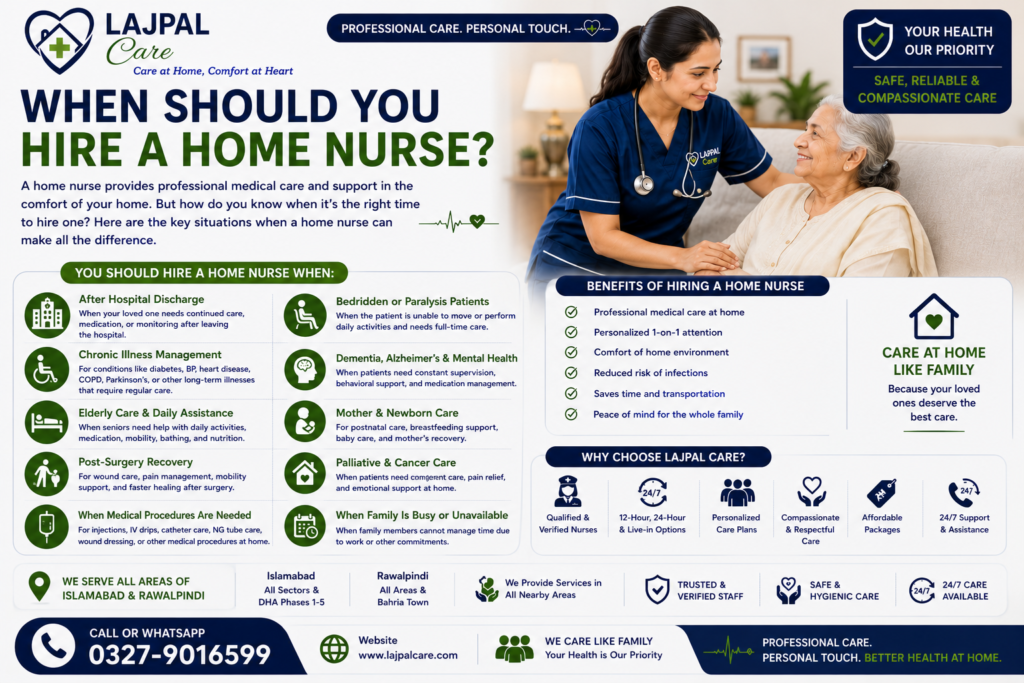
Certain situations may indicate that professional home nursing support could be beneficial.
Recovery After Surgery
Patients recovering from major surgery may need assistance with wound care, medication schedules, mobility, and monitoring during the healing process.
Frequent Hospital Visits
If a patient regularly travels to a hospital for routine nursing procedures, some of these services may be safely provided at home when clinically appropriate.
Difficulty Managing Medications
Patients taking multiple prescribed medications may benefit from professional nursing support to help follow treatment schedules and observe for possible concerns.
Reduced Mobility
People who have difficulty walking, standing, or moving independently often require assistance with safe transfers, hygiene, and daily care.
Chronic Medical Conditions
Patients living with long-term conditions such as diabetes, Parkinson’s disease, COPD, or heart disease may require ongoing nursing support as recommended by their healthcare team.
Elderly Patients Living Alone
Older adults who have limited mobility or require regular health monitoring may benefit from scheduled home nursing visits and personal care support.
Bedridden Patients
Patients confined to bed often require regular repositioning, skin care, hygiene support, feeding assistance, and monitoring to reduce the risk of complications.
Stroke Recovery
Many stroke survivors require ongoing nursing care, mobility assistance, and rehabilitation support after leaving the hospital.
Hospital Discharge
Patients discharged after serious illness or surgery may require temporary nursing care to continue their recovery safely at home.
Medical Conditions That May Require Home Nursing
Professional home nursing is commonly used for patients with:
-
Stroke
-
Cancer
-
Parkinson’s disease
-
Alzheimer’s disease
-
Dementia
-
Diabetes
-
COPD
-
Kidney disease
-
Heart disease
-
Post-operative recovery
-
Neurological disorders
-
Long-term mobility limitations
The need for home nursing depends on the patient’s overall condition and should be determined in consultation with the treating physician.
Benefits of Hiring a Home Nurse
Professional home nursing offers several important benefits.
Personalized Care
Each patient receives care based on individual medical needs rather than a standard routine.
Comfortable Recovery
Patients often feel more relaxed while recovering in familiar surroundings with family support.
Continuous Monitoring
Regular observation helps identify changes in the patient’s condition so families can seek medical advice when needed.
Family Support
Home nurses provide practical guidance that helps family members participate confidently in daily patient care.
Flexible Care Plans
Services can often be arranged as:
-
Per-visit nursing
-
Daily visits
-
12-hour nursing care
-
24-hour nursing care
-
Long-term home nursing
Short-Term vs Long-Term Home Nursing
Some patients require nursing care only during recovery after surgery or hospital discharge. Others may need ongoing support because of chronic illness, disability, or age-related health conditions.
The duration of care should always be based on the patient’s healthcare needs and medical recommendations.
Questions to Ask Before Hiring a Home Nurse
Before choosing a home nursing provider, consider asking:
-
What experience do you have with my loved one’s condition?
-
What nursing procedures will be provided?
-
How will the patient’s progress be monitored?
-
Are emergency communication procedures available?
-
Can care plans be adjusted if the patient’s condition changes?
-
Are 12-hour and 24-hour services available?
Frequently Asked Questions
Is it too early to hire a home nurse after hospital discharge?
Many patients benefit from professional nursing support immediately after discharge, especially when they require wound care, medication management, or ongoing monitoring. The timing should follow the treating physician’s recommendations.
Can elderly people receive home nursing without being hospitalized first?
Yes. Home nursing may be appropriate for older adults who need regular healthcare support even if they have not recently been admitted to a hospital.
Do home nurses help with rehabilitation?
Home nurses can support recovery by assisting with prescribed care plans and coordinating with rehabilitation professionals where appropriate.
Can I hire a home nurse for only a few weeks?
Yes. Depending on the patient’s needs, home nursing may be arranged for short-term recovery or long-term ongoing care.
How do I know if my loved one needs professional nursing rather than a caregiver?
If the patient requires clinical nursing procedures such as medication administration, wound care, vital signs monitoring, catheter care, or other skilled nursing tasks, a qualified home nurse may be more appropriate. A healthcare professional can help determine the right level of care.
Conclusion
Hiring a home nurse at the right time can improve patient comfort, support recovery, and provide families with confidence that professional care is available at home. Whether the need is temporary after surgery or ongoing because of a chronic illness, skilled home nursing allows many medically stable patients to continue receiving quality care while remaining in familiar surroundings.
Suggested Internal Links
Connect this article with:
-
What Are Home Nursing Services?
-
Benefits of Home Nursing Services
-
How to Choose the Best Home Nurse
-
Home Nursing Services
-
Home Patient Care Services
-
Hospital Discharge Care
-
Bedridden Patient Care
-
Stroke Patient Care
-
Elderly Care at Home
-
ICU Care at Home
-
Patient Attendant Services
Website: https://homepatientcareservices.com