How to Choose the Best Home Nurse | A Complete Guide for Families
How to Choose the Best Home Nurse
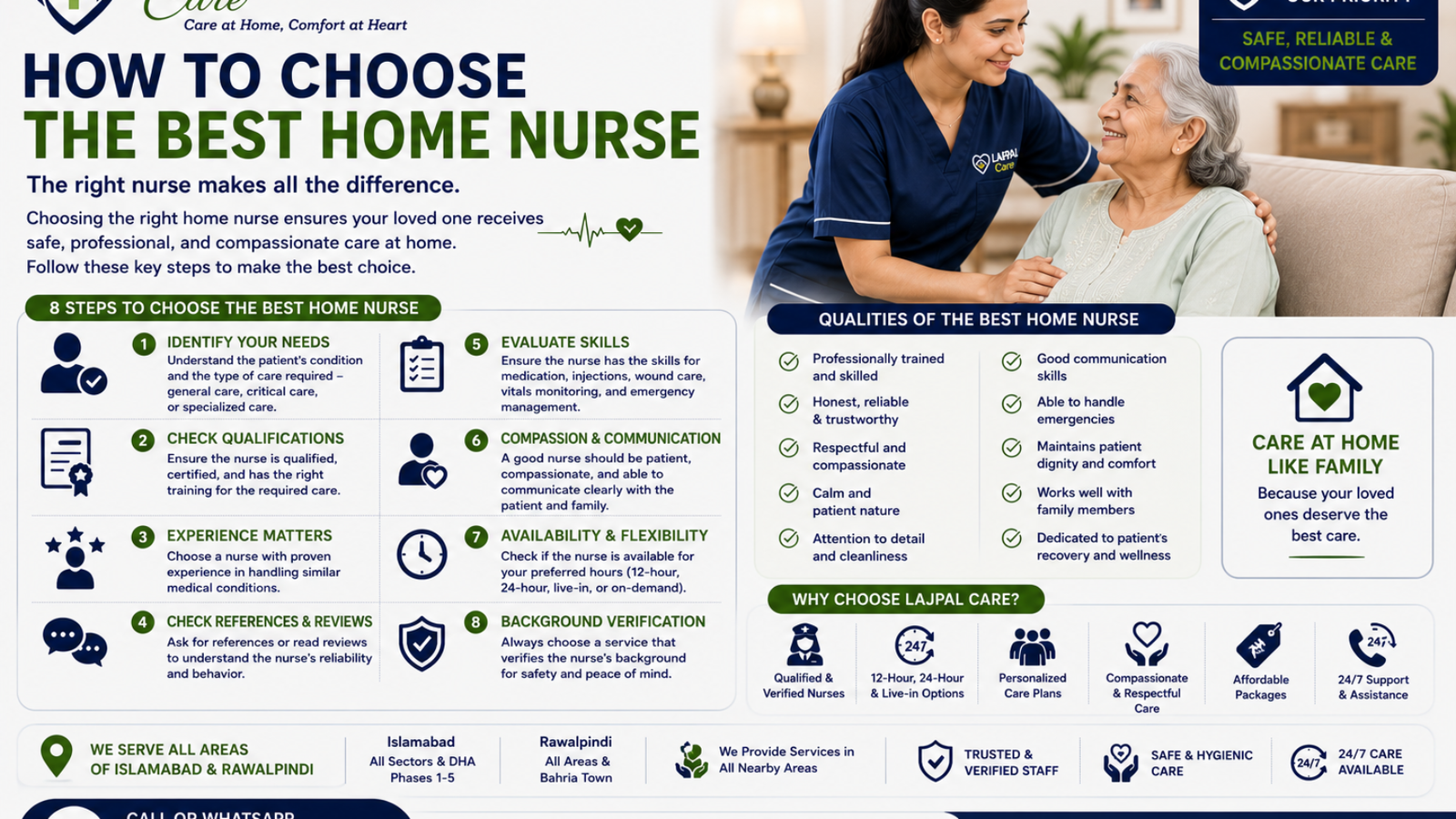
Choosing the right home nurse is one of the most important decisions a family can make when a loved one needs professional healthcare at home. A qualified nurse not only provides medical support but also helps improve comfort, safety, and confidence during recovery.
Whether the patient is recovering after surgery, living with a chronic illness, or requiring long-term nursing care, selecting an experienced and compassionate nurse can make a meaningful difference. This guide explains the most important factors to consider before hiring Home Nursing Services.
Table of Contents
-
Why Choosing the Right Home Nurse Matters
-
Understand the Patient’s Care Needs
-
Verify Qualifications and Training
-
Look for Relevant Experience
-
Assess Communication Skills
-
Ask About Service Availability
-
Ensure Personalized Care Plans
-
Check Reputation and Reviews
-
Questions to Ask Before Hiring
-
Warning Signs to Avoid
-
Frequently Asked Questions
-
Conclusion
Why Choosing the Right Home Nurse Matters
Every patient has unique healthcare needs. Some require assistance with medication administration, while others need wound care, rehabilitation support, or long-term monitoring. Choosing a nurse with the right knowledge and experience helps ensure that care is delivered safely and according to the patient’s prescribed treatment plan.
Understand the Patient’s Care Needs
Before selecting a home nurse, identify the level of care required.
Examples include:
-
Post-surgical nursing care
-
Elderly care
-
Stroke patient care
-
Bedridden patient care
-
ICU or critical care support
-
Ventilator or tracheostomy care
-
Catheter or feeding tube care
-
Medication management
-
Long-term nursing care
Understanding these needs helps match the patient with an appropriately qualified nurse.
Verify Qualifications and Professional Training
Choose a nurse who has relevant education, professional training, and experience for the type of care required.
Depending on the patient’s condition, appropriate qualifications may include:
-
Registered nursing education
-
Clinical training relevant to the required care
-
Experience with home healthcare
-
Knowledge of infection prevention practices
-
Ability to monitor and document patient progress
If specialized procedures are required, confirm that the nurse has appropriate experience within their professional scope.
Look for Relevant Experience
Experience matters, especially for patients with complex healthcare needs.
Ask whether the nurse has previously cared for patients with conditions such as:
-
Stroke recovery
-
Bedridden care
-
Cancer care
-
Dementia or Alzheimer’s disease
-
Parkinson’s disease
-
Diabetes
-
Post-operative recovery
-
Respiratory conditions requiring oxygen therapy
Relevant experience helps the nurse recognize changes in the patient’s condition and provide consistent support.
Assess Communication Skills
A professional home nurse should communicate clearly with both the patient and family members.
Good communication includes:
-
Explaining care procedures in understandable language
-
Listening to patient concerns
-
Reporting significant changes to the treating physician or supervising healthcare team
-
Maintaining respectful and compassionate interactions
Effective communication builds trust and improves coordination of care.
Ask About Service Availability
Different patients require different schedules.
Before hiring, ask whether services are available as:
-
Per-visit nursing
-
Daily scheduled visits
-
Day shifts
-
Night shifts
-
12-hour nursing services
-
24-hour nursing services
-
Long-term home nursing
Choose a schedule that matches the patient’s medical and personal needs.
Ensure Personalized Care Plans
High-quality Home Nursing Services should be tailored to each patient rather than following a one-size-fits-all approach.
A personalized care plan may include:
-
Health monitoring
-
Medication support
-
Hygiene assistance
-
Nutrition support
-
Mobility assistance
-
Rehabilitation coordination
-
Family education
Care should always align with the recommendations of the patient’s treating physician.
Check Reputation and Reviews
Before selecting a home nursing provider, consider:
-
Verified patient feedback
-
Professional reputation
-
Responsiveness to inquiries
-
Clear communication about services
-
Transparent care processes
Reliable providers are generally open about their services and willing to answer questions before care begins.
Questions to Ask Before Hiring a Home Nurse
Consider asking the following questions:
-
What experience do you have with this type of patient?
-
What nursing services will you provide?
-
How will the patient’s condition be monitored?
-
How do you communicate important health changes?
-
Are flexible care schedules available?
-
How do you help families participate in patient care?
-
What happens if additional support is needed?
These questions can help families understand whether the service matches the patient’s needs.
Warning Signs to Avoid
Be cautious if a provider:
-
Cannot clearly explain the services offered.
-
Is unwilling to discuss staff qualifications or experience.
-
Does not communicate professionally.
-
Makes unrealistic promises or guarantees specific health outcomes.
-
Does not encourage coordination with the patient’s treating physician.
Choosing a reputable provider helps reduce misunderstandings and supports safer patient care.
Frequently Asked Questions
Should I hire a nurse or a caregiver?
It depends on the patient’s needs. A nurse is appropriate when professional nursing procedures or clinical monitoring are required. A caregiver generally assists with daily living activities such as personal hygiene, mobility, and companionship.
Can a home nurse care for elderly patients?
Yes. Many elderly individuals benefit from professional nursing support for medication management, health monitoring, mobility assistance, and ongoing care.
Do home nurses provide post-surgical care?
Yes. Home nurses may provide post-operative support such as wound care, medication administration, health monitoring, and recovery assistance according to the physician’s treatment plan.
Is it possible to hire a nurse for only a few hours each day?
Many home healthcare providers offer flexible care options, including scheduled visits, 12-hour shifts, and 24-hour services.
How do I know if my loved one needs a home nurse?
Patients recovering after surgery, managing chronic illnesses, requiring regular nursing procedures, or needing continuous medical observation may benefit from professional home nursing. The treating physician can help determine the appropriate level of care.
Conclusion
Choosing the best home nurse requires careful consideration of the patient’s healthcare needs, the nurse’s qualifications, relevant experience, communication skills, and the quality of the home healthcare provider. Taking the time to evaluate these factors helps families make informed decisions and ensures that patients receive compassionate, professional, and individualized care at home.
Suggested Internal Links
Link this article to:
-
What Are Home Nursing Services?
-
Benefits of Home Nursing Services
-
Home Nursing Services
-
Home Patient Care Services
-
Elderly Care at Home
-
Bedridden Patient Care
-
Stroke Patient Care
-
ICU Care at Home
-
Hospital Discharge Care
-
Patient Attendant Services
Website: https://homepatientcareservices.com